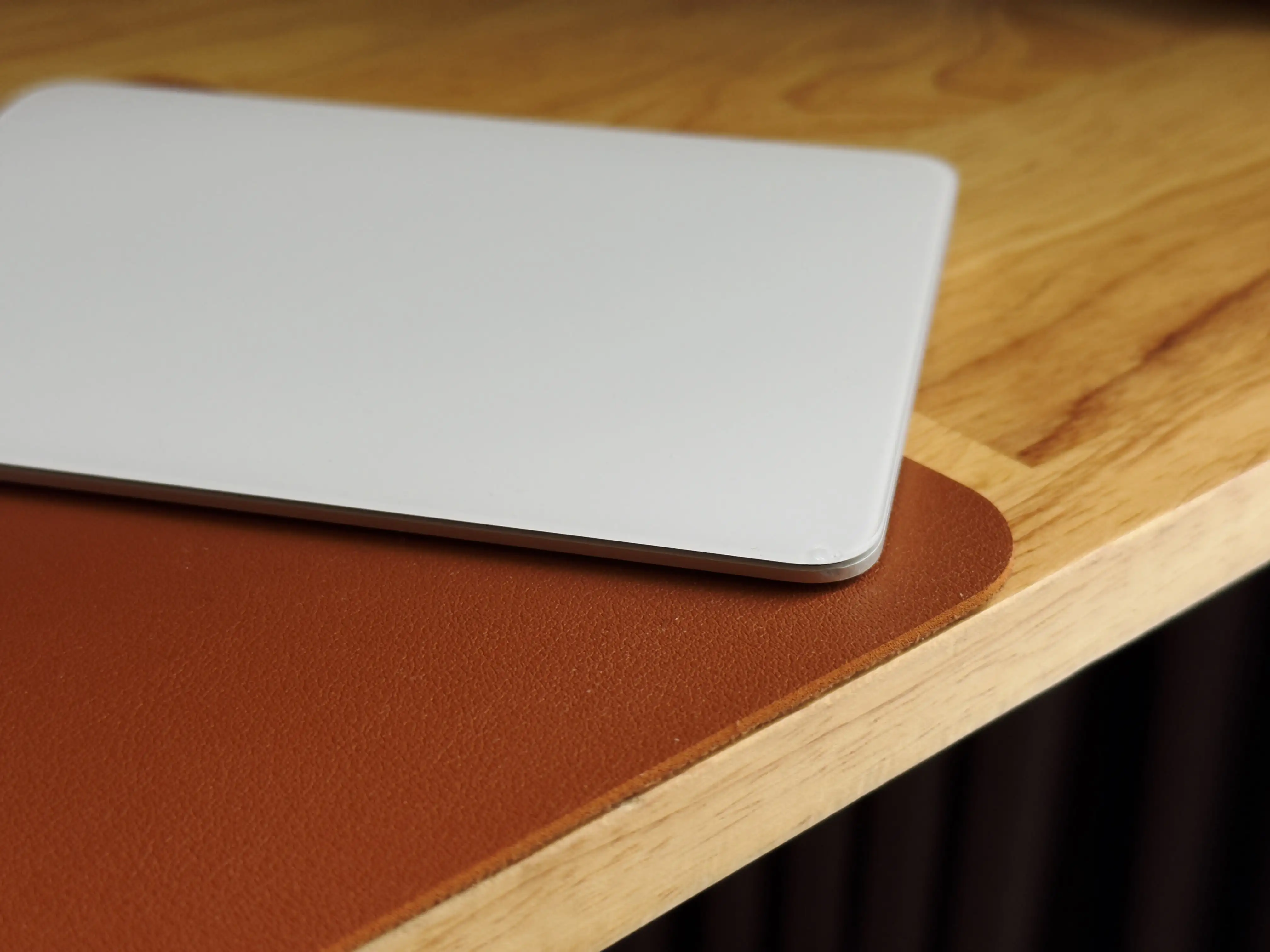
The other day I dropped my brand new Magic Trackpad on the ground. A tiny piece of the glass layer cracked, and the aluminum part now has a small scuff mark. You wouldn’t see it unless you looked closely at that corner. Luckily, the trackpad still works perfectly, it just has a little cosmetic imperfection now. My old self might have been impulsive enough to try to replace it with a new one, because everything had to be pristine.
I used to want everything in my life to be perfect — from routines, processes, and systems to how things on my desk were arranged. Everything had to align neatly, following an invisible grid I had drawn in my head. That part is still kind of true today. My colleagues have noticed that I like to tilt my monitor to the right angle and carefully align my keyboard and mouse before I start the day. In my world, things have to feel perfect (or is this just OCD?).
I think wanting perfection isn’t inherently bad. It drives you to make things better and pushes others out of their comfort zones to achieve greater heights. But the thing is, everyone has their own definition of perfect. Sometimes, I fixate on things while oblivious to what matters more to others.
For example, I can’t stand a sink full of dishes and will wash everything immediately after I’m done using it. Yet, I barely pay attention to our kitchen counter, cluttered with things we’ve cleaned but haven’t put away. Meanwhile, my fiancée couldn’t care less about the sink — to her, that’s the whole point of having one — but the kitchen counter? It better be spotless. In the end, we compromise: I’m working on leaving fewer things on the counter, and she’s doing her best not to wait until the sink is overflowing with dishes before asking for my help.
We make things up, then we measure them against our arbitrary standards, and we forget that what’s not perfect to us doesn’t make it meaningless. So, I’m learning to loosen up a little. After all, I’m not perfect, and life isn’t some rigid grid. Not everything — objects, routines, relationships, even ourselves — needs to be flawless to work beautifully.
Reframing helps whenever I find myself agonizing over small imperfections. Something’s a little off-center on my desk? Now I can reach it better. Scuff marks on my gear? They’re proof I’ve created something with it. Didn’t get to all the tasks on my to-do list today? Now there’s something to look forward to tomorrow. A messy sink? We just cooked a meal and spent quality time together.
Maybe life is about making room for scuffs and messes we didn’t expect — and learning to grow with them.